Capturing the Value of Your Scrub Program
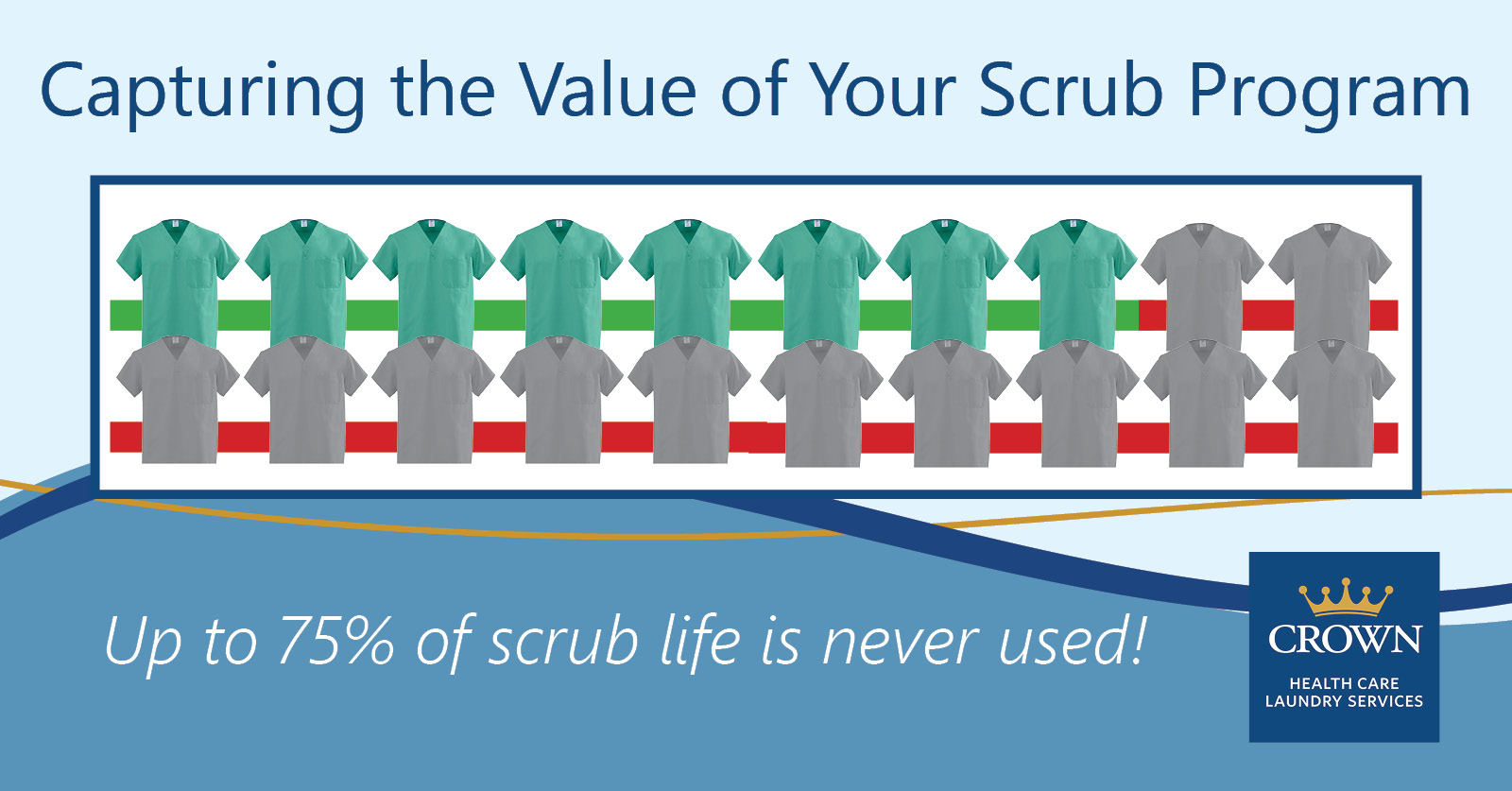
Scrubs are designed for repeated use, with a typical lifespan of approximately 20 washes. However, in many facilities, they are often used only 5 to 10 times before being lost or misused. That means a significant portion of their value is never fully realized.
At the same time, when scrubs leave the facility, they move outside of a controlled healthcare environment. This increases the risk of contaminants being introduced and brought back into clinical settings, undermining infection prevention efforts.
Guidance from organizations such as AORN, the CDC, HLAC, ACHA, and AST consistently reinforces the same principles: healthcare garments — especially OR scrubs — should be changed on-site, remain within controlled environments, be properly contained after use, and be laundered through accredited healthcare laundry processes. Home laundering cannot ensure the same level of protection.
Across both inpatient and outpatient settings, scrub management is not just about cost control. It’s about protecting patients, supporting staff safety, and capturing the full value of your linen program.
How Scrub Loss Impacts Your Program
In a weight-based linen program that measures Clean Soil Variance, scrub loss does not appear as a separate line item. Instead, it contributes to your overall linen loss, making it less visible but just as impactful.
For example, a 310-bed hospital uses around 7,000 scrub pieces each month. Based on average item weights, this represents approximately 3,500 pounds of scrubs in circulation monthly.
When scrubs are not returned, that weight disappears from the system.
If just 10% of those items are not returned, the result is:
- ~700 pieces lost per month
- ~350 pounds of missing linen each month
- ~4,200 pounds annually
Those missing pounds directly contribute to higher clean-soil variance and increased replacement needs.
This isn’t additional usage—it’s value that was already in your program but never fully captured.
Why Scrubs are Lost
Scrub loss is rarely accidental—it is most often the result of a lack of a clearly defined and consistently enforced scrub policy.
Without a standard process in place, staff are left to rely on convenience, which leads to inconsistent handling and increased loss.
Common gaps include staff leaving the facility in scrubs, taking them home instead of returning them, or not having a clearly designated place to deposit soiled items. Inconsistent expectations between departments only make the problem worse.
When expectations are unclear or not reinforced, even small behaviors repeated daily lead to significant loss over time.
Simple Changes That Make a Big Difference
Reducing scrub loss does not require major operational changes. It comes down to putting the right structure in place and making the correct process easy to follow.
Keeping scrubs on-site is one of the most effective steps a facility can take. Staff should arrive in personal clothing, change on-site, and remove scrubs before leaving. This significantly reduces both loss and contamination risk.
Just as important is having the right place to return them. Clearly marked, conveniently located soiled linen hampers in all scrub change areas support proper handling practices emphasized by ACHA and help ensure scrubs are returned to the system.
Consistency across departments also plays a major role. When expectations are the same in inpatient units, surgery, and outpatient areas, compliance improves and confusion is reduced.
For facilities that continue to experience loss, scrub dispensing systems such as ScrubEx can provide an added layer of accountability by tracking usage and requiring returns before issuing clean scrubs.
When frontline education aligns with leadership visibility and operational accountability, variance often begins to improve.
The Bottom Line
Scrub loss is not always visible, but its impact is measurable. Every pound that is not returned increases total linen loss and reduces the value you receive from your program.
Facilities that see the best results don’t necessarily use less—they manage better. With a clear scrub policy, proper soiled linen handling, and consistent expectations, it’s possible to recover lost weight, improve infection prevention, and get the full value from the linen already in circulation.
Have questions? Reach out to your customer service representative or click here to send us an email.