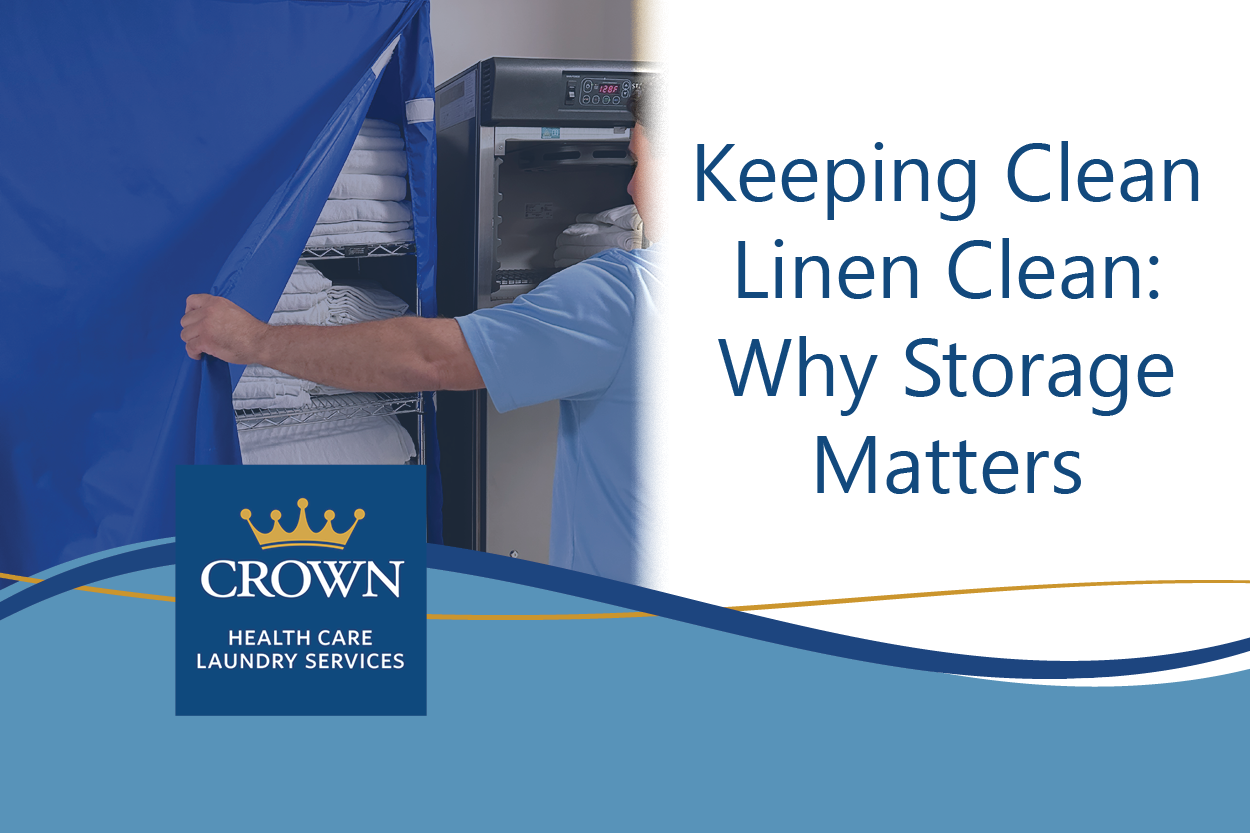
Keeping Clean Linen Clean: Why Storage Matters
Clean linen plays a critical role in patient care, yet its impact on infection prevention is often underestimated. While proper laundering is essential, how linen is stored before use is just as important. Central linen storage helps protect linen integrity, reduce contamination risk, and support safe patient environments.
Central linen storage means keeping clean linen in designated clean linen rooms or covered carts until it is needed. These controlled areas are designed to limit exposure and preserve linen cleanliness. When linen remains protected until the point of use, it is far less likely to become compromised.
An Important Infection Control Standard
Unused linen that has entered a patient room should not be returned to the clean linen room. Instead, it should be placed in the appropriate soiled linen container and processed through the laundry cycle. This practice helps protect the integrity of the entire clean linen supply and reduces the risk of cross-contamination.
Once clean linen leaves a controlled storage area and enters a patient room or care environment, the risk changes. Even linen that appears unused may be exposed to:
- Contact with staff scrubs
- Airborne particles
- Environmental surfaces and equipment
- Increased room traffic and handling
Because these exposures are not always visible, there is no reliable way to confirm linen remains uncontaminated once it has entered a patient care space.
Why Central Linen Storage Makes a Difference
By keeping linen centralized and protected until the moment it is needed, facilities reduce unnecessary handling of clean linen, limit exposure to environmental contaminants, maintain confidence in linen cleanliness for both patients and staff, and support consistent infection prevention practices across all care areas.
Best practices that support infection control and linen integrity include:
- Storing clean linen only in designated clean linen rooms or covered carts
- Pulling linen as needed rather than pre-stocking patient rooms
- Never returning unused linen from patient areas to clean storage
- Treating all linen removed from patient rooms as soiled linen
While infection prevention is the primary driver, central linen storage also supports more effective linen management overall. Facilities that use centralized storage often see less linen hoarding and overstocking, improved visibility into actual linen usage, and more consistent linen availability across units. Over time, these improvements help reduce unnecessary linen replacement costs and support a more efficient, sustainable linen program.
Survey Readiness Matters
Clean linen storage and handling practices are frequently reviewed during regulatory and accreditation surveys. Surveyors look closely at whether clean and soiled linen are clearly separated, if clean linen is adequately protected from contamination, and whether handling practices align with infection control standards. Central linen storage helps facilities demonstrate consistency in these areas and reduces the risk of findings related to linen being stored in non-designated locations or handled inappropriately. When storage practices are standardized and followed across departments, facilities are better positioned for survey readiness and ongoing compliance.
Central linen storage is a shared responsibility and a simple practice with significant impact. When linen is protected until the point of use, facilities strengthen infection control efforts, support survey readiness, and maintain a more efficient and reliable linen program.
Have questions? Reach out to your customer service representative or click here to send us an email.